
El Popo Staff, Spring 2026
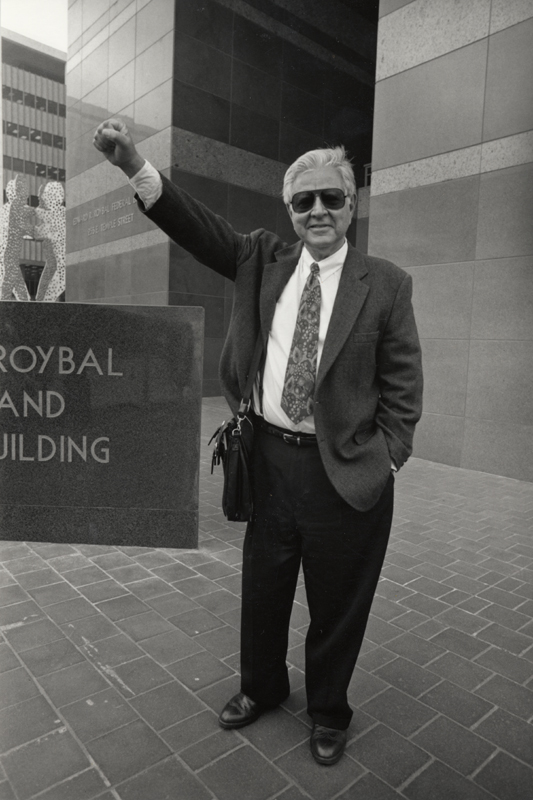
Rodolfo “Rudy” Acuña, beloved educator, groundbreaking historian, and tireless advocate for justice, passed away on March 23, 2026, at the age of 93. For those who knew him—as students, colleagues, and community members—he was more than a scholar. He was a force: principled, fearless, and deeply committed to telling the truth about history and to uplifting his community.
Acuña’s work at California State University, Northridge was not just a career—it was a calling. Arriving during the height of student activism in the late 1960s, he helped build the Chicano Studies Department from the ground up. What emerged was not simply an academic program, but a space where students—many of them first-generation and searching for their place—could finally see themselves reflected in what they were learning.
He believed that education should matter in people’s lives. In his classroom, history was not distant or abstract—it was alive, urgent, and often personal. Students remember being challenged, sometimes pushed, but always respected. He asked them to think critically, to question power, and to understand their own stories as part of a larger struggle for dignity and justice.
His landmark book, Occupied America: A History of Chicanos, grew out of that same commitment. It was not just a textbook—it was, for many, the first time they encountered a history that spoke to their experiences. Generations of students across the country would come to know Acuña through its pages, even if they never sat in his classroom.
At CSUN, his impact extended far beyond lectures and publications. He helped shape a department culture rooted in community, accountability, and purpose. He advocated for hiring faculty who understood and reflected the communities they served. He stayed connected to movements outside the university, ensuring that Chicano Studies remained grounded in real struggles, not just academic theory.
Those who worked alongside him knew his clarity and conviction. He did not shy away from difficult conversations or institutional critique. But beneath that firmness was a deep care—for his students, for the integrity of the field, and for the possibilities of education to transform lives.
Even after retirement, Acuña remained present—writing, speaking, and continuing to challenge others to do better. He never stopped believing that history mattered, and that telling it honestly was a form of justice.
Rodolfo Acuña leaves behind more than a body of work. He leaves a legacy carried forward in classrooms, in communities, and in the lives of those he taught and mentored. At CSUN and far beyond, his influence will continue to be felt wherever students are encouraged to question, to learn, and to see themselves as part of history.
He will be deeply missed, and long remembered.